
Why has social media become a popular platform for people to voice their frustrations and complaints, and what effects does this have on individuals and society?
Social media has transformed the way people express their opinions and emotions. Many individuals now use platforms such as Facebook, Instagram, and X to publicly share their frustrations and complaints.
SOCIETY & SYSTEMSALL POSTS
Whystill
6/16/20268 min read
The Social Media Landscape
In recent years, social media has emerged as a formidable tool for communication, evolving significantly from its original purpose of connecting friends and family. Today, a plethora of platforms such as Facebook, Twitter, Instagram, and TikTok serve as digital arenas where users engage not only in casual interactions but also in serious public discourse. The speed at which these platforms have been adopted across diverse demographics is indicative of their influence in contemporary society.
The rise of social media has transformed how individuals express their thoughts and feelings. It has shifted the traditional avenues of communication toward more immediate and widespread forms of dialogue. Users, regardless of age, are now exposed to a variety of content that reflects personal and collective experiences, including sentiments of frustration and discontent. This accessibility has democratized the act of voicing complaints, making it easier for individuals to articulate their concerns in a public forum.
Moreover, social media platforms are uniquely equipped to amplify individual voices. A simple post or tweet can garner attention, prompting discussions that transcend geographic boundaries. This aspect has facilitated a culture where dissatisfaction can be shared widely, often leading to virality. Consequently, social media has established itself as a catalyst for change, influencing not only personal relationships but also societal norms and behaviors.
As we delve deeper into the complexities of this digital phenomenon, it becomes essential to examine its role not just as a medium for connecting individuals, but also as a prominent space for discussing frustrations and complaints that may otherwise go unheard. This multifaceted landscape presents both opportunities and challenges that affect how we perceive and engage with issues that matter to us.
The Role of Anonymity and Accessibility
In recent years, social media has evolved into a predominant platform for expressing frustration and complaints, largely due to the features of anonymity and accessibility that these platforms offer. The ability to remain anonymous when voicing concerns encourages individuals who otherwise might refrain from speaking out in traditional, public forums. This sense of security can be particularly beneficial for those who fear potential repercussions related to their complaints.
Anonymity empowers users to express their grievances without the fear of personal backlash. For instance, many people hesitate to file complaints in face-to-face situations due to concerns about judgment or retaliation. However, on social media, users can share their experiences and opinions covertly, which diminishes the personal risks involved. This anonymity creates a safe space that facilitates open expression, allowing users to connect over shared frustrations, thereby normalizing discussions that might be otherwise stigmatized.
Moreover, accessibility plays a crucial role in this dynamic. Social media platforms are readily available, allowing users to voice their complaints at any time and from anywhere. The convenience of crafting a post or a tweet enhances the likelihood of immediate engagement with the issue at hand. This immediacy not only promotes a sense of urgency around various concerns but also broadens the audience that receives these messages, enabling them to garner attention and support rapidly.
However, the implications of anonymity should not be overlooked. While it can empower users to share their legitimate concerns, it can also lead to a proliferation of disinformation and unwarranted complaints. Individuals may exploit the veil of anonymity to express baseless allegations without accountability. Thus, while the features of anonymity and accessibility on social media amplify the expression of grievances, they also create a complex environment that necessitates careful consideration of the authenticity and intentions behind those expressions.
Social Media as a Reflection of Societal Issues
Social media has increasingly become a mirror for broader societal issues, serving as a platform where frustrations are expressed and collective grievances are acknowledged. Among the most significant areas reflected in online discourse are political discontent, economic struggles, and social injustices. The interconnectedness of users on social media platforms facilitates the sharing of personal experiences that resonate with common societal challenges.
Political discontent, as observed in various nations, often surfaces vividly on social media. Users express dissatisfaction with government policies, political leaders, and electoral processes. The immediacy of social media enables individuals to mobilize quickly, sharing information and rallying support for movements such as protests or policy changes. This rapid dissemination of information not only amplifies personal frustrations but also helps to organize collective action, showcasing a populace eager for change.
Economic struggles have found a voice on social media as well, with users articulating their hardships during times of economic downturn. From unemployment to increasing living costs, frustrations about inequality and insufficient opportunities are shared widely. Hashtags and online campaigns have emerged to highlight these economic issues, drawing attention to both individual stories and larger systemic problems. The result is a growing awareness of the disparities that characterize modern economies.
Social injustices, including issues related to race, gender, and LGBTQ+ rights, similarly feature prominently on social media platforms. Users utilize these digital spaces to challenge discrimination and advocate for equality. Movements such as #BlackLivesMatter and #MeToo illustrate how social media fosters dialogue surrounding important societal concerns, as users unite to confront injustices. The feedback loop created by these conversations often serves as a catalyst for real-life change.
In summary, social media serves as a powerful reflection of societal issues, effectively amplifying frustrations connected to political, economic, and social realms. By facilitating open discussions and collective mobilization, it creates a dynamic space where grievances are not only aired but can lead to meaningful engagement and change.
The Psychological Impact on Individuals
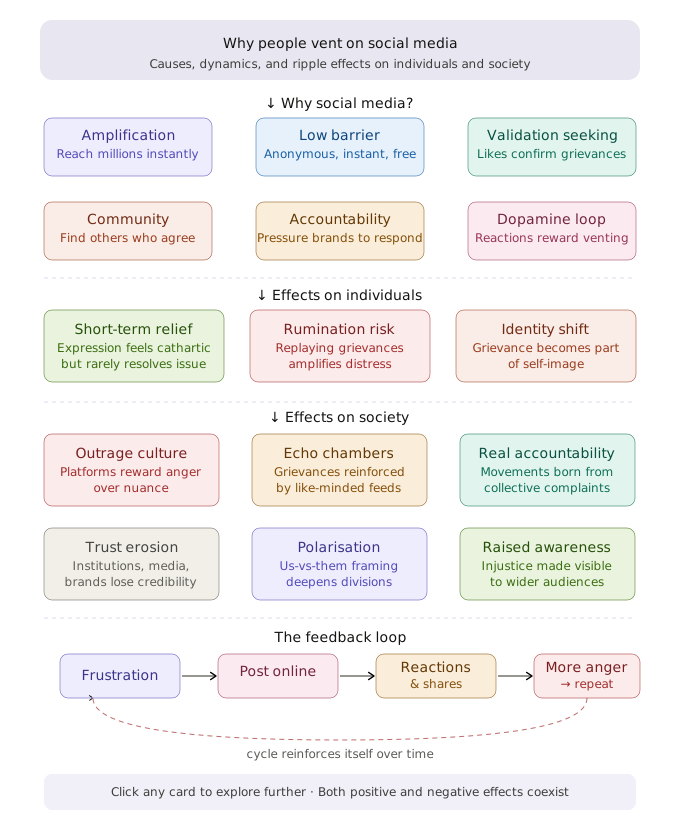
The advent of social media has transformed how individuals express their frustrations and seek validation. Many users flock to these platforms, finding not only a space to voice their grievances but also a potential sense of community among like-minded individuals. The emotional response generated by receiving supportive comments can significantly bolster one's self-esteem and provide a feeling of belonging. Users often report a sense of relief after sharing their frustrations publicly, as it fosters an environment where they can articulate their emotions openly.
However, the psychological ramifications are not universally positive. The nature of online discourse can lead to heightened feelings of anxiety and outrage, particularly when users engage with negative or polarizing content. These emotional responses are fueled by the immediate feedback loop created by likes, shares, and comments, which can sometimes escalate tensions and provoke further outrage. The engagement with controversial issues may inadvertently create an echo chamber, where users interact primarily with those who share similar frustrations, reinforcing their views and heightening feelings of discord.
This cycle of engagement can impose a significant personal toll. Constant exposure to complaints and frustrations expressed online can potentially lead to mental fatigue, where individuals may find themselves more irritable and less tolerant in their day-to-day interactions. Moreover, the pressure to continuously contribute to these discussions can induce stress, as individuals feel the need to remain vigilant and responsive to the prevailing narratives of frustration. While social media can serve as a therapeutic outlet for some, it is crucial to balance participation in these dialogues to mitigate their adverse psychological effects. Understanding the impact—both positive and negative—is essential for fostering a healthier relationship with social media platforms.
The Role of Influencers and Media in Amplifying Voices
In recent years, the rise of social media has not only changed the way we communicate but also redefined how grievances and complaints are voiced and shared. Influencers, who have become central figures within digital communities, play a crucial role in this paradigm shift. By leveraging their platforms, they can amplify the frustrations of everyday users, thereby giving them a greater reach and visibility than traditional media typically affords.
Influencers come with varied followings, allowing for specialized groups to resonate with diverse issues, hence creating echo chambers for shared experiences. This phenomenon can lead to rapid escalation of particular complaints that might otherwise go unnoticed. Whether it be a societal injustice, corporate malpractice, or personal grievances, influencers curate and present these voices in a manner that sparks conversation and encourages followers to engage. Through their endorsement, they have the power to transform individual frustrations into widespread movements.
Furthermore, traditional media outlets have also embraced social media as a means to gauge public sentiment and spotlight influential personalities sharing grievances. Media organizations collaborate with influencers to highlight relevant social issues, creating a symbiotic relationship where both parties share and promote narratives that could yield societal impact. This dynamic often results in a heightened sense of urgency around complaints that are trending on platforms, which can provoke faster responses from organizations or authorities.
However, with such impactful reach comes significant responsibility. Influencers and media representatives must navigate the delicate balance of advocacy and accountability. In some instances, amplifying voices can lead to misrepresentation, where issues are oversimplified or misconstrued for engagement purposes. Thus, it becomes paramount for influencers to prioritize ethical standards and factual accuracy while addressing the complaints they choose to spotlight, ensuring that the amplification of voices also serves the broader context of social truth.
Consequences for Society: Social Movements and Change
The advent of social media has significantly transformed the landscape of communication, particularly in how individuals express their frustrations and complaints regarding societal issues. Platforms such as Twitter, Facebook, and Instagram have provided a vital space for individuals to voice their grievances, leading to the emergence of various social movements. This collective expression often stems from shared experiences and injustices, fostering a sense of community among users who may feel marginalized or unheard.
One of the most notable effects of this online discourse is the ability to mobilize and organize protests and movements quickly, as exemplified by the Black Lives Matter and #MeToo movements. These campaigns not only amplify individual voices but also catalyze widespread awareness of critical issues, compelling traditional media outlets to cover these narratives. The virality of social media posts can spark significant public interest and engage a broader audience, leading to real-world actions and policy discussions.
Furthermore, the pressure from social media-driven movements has compelled corporations and governments to respond. Public demand for accountability has resulted in changes in policies, practices, and even corporate social responsibility. For instance, businesses may alter their marketing strategies or operational practices to align with evolving societal values that are increasingly discussed and endorsed online.
As a tool for collective grievances, social media not only raises awareness but can also serve as a mechanism for substantive change, shifting the public discourse around critical issues. Consequently, social media has become a double-edged sword; it has the power to influence social change while also presenting challenges regarding the management of misinformation, polarization, and backlash against movements. The role of social media in societal transformation, through the lens of complaints and frustrations, illustrates its profound impact on modern activism and civic engagement.
Conclusion: The Double-Edged Sword of Social Media Activism
Social media has become an increasingly prominent platform for individuals to express their frustrations and grievances, enabling the rapid dissemination of thoughts and feelings across diverse audiences. This powerful medium serves as both a vehicle for advocacy and a means of venting dissatisfaction, highlighting its dual nature as a double-edged sword. The accessibility of these platforms has empowered users to raise awareness about various issues, promoting social change and fostering a sense of community among those who share similar sentiments.
However, the rise of social media also comes with significant drawbacks. The potential for amplifying negativity and misinformation is a concern, leading to collective frustration and a toxic online atmosphere. Individuals may find themselves caught in echo chambers, where their grievances are validated, but constructive dialogue ceases to exist. Furthermore, the ease of venting frustrations online may discourage more substantive forms of engagement, such as face-to-face discussions or community organizing.
As users navigate the complexities of social media, it is crucial to approach these platforms with a sense of responsibility and awareness. Critical engagement with content, consideration of the broader implications of one's actions, and striving for constructive conversations can help mitigate some of the negative effects associated with these channels. By understanding both the potential benefits and pitfalls, individuals can better harness the power of social media as a tool for meaningful activism, rather than allowing it to serve solely as a platform for frustration.