
Why Do We Have More Ways to Reach Each Other Than Ever, Yet Fewer People We Can Call at 2 a.m.?
That's the paradox: we've built infinite channels for contact, but fewer relationships deep enough to hold a 3 a.m. phone call. Breadth replaced depth somewhere along the way. Followers, not friends. Reactions, not presence.
RELATIONSHIPS & LONELINESSALL POSTS
Whystill
6/22/20267 min read
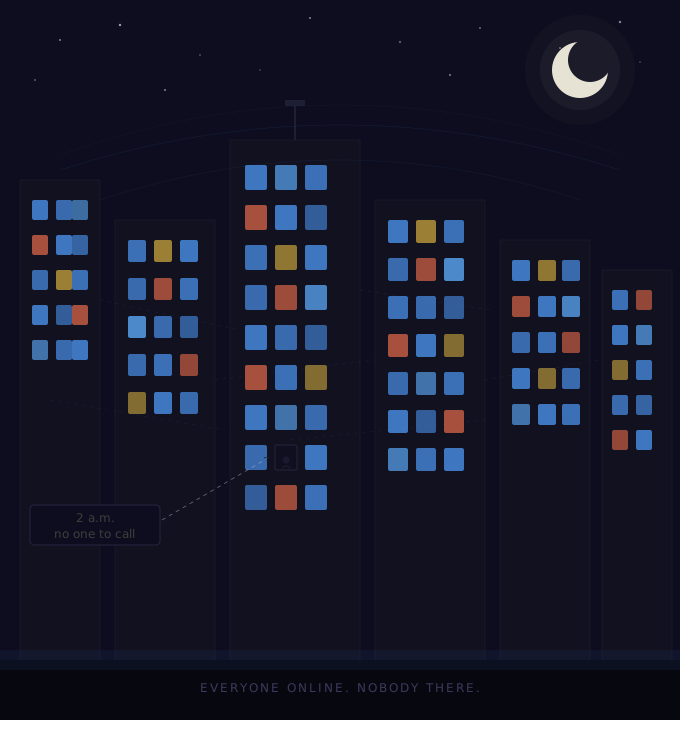
Introduction: The Paradox of Connectivity
In the contemporary world, it is striking to observe the paradox of connectivity, where individuals possess more means of communication than ever before, yet often feel a profound sense of isolation. Advancements in technology have enabled us to reach out to others instantaneously, whether through text messages, social media platforms, or video calls. This abundance of communication channels, while convenient, raises questions about the quality of our interactions and the depth of our relationships.
Historically, personal connections were primarily fostered through face-to-face encounters, which allowed for the development of intimacy and trust. With the advent of digital communication tools, the landscape of social interaction has shifted dramatically. Today, one can send a message in seconds or share life updates with hundreds of acquaintances at the click of a button. Despite these capabilities, many find themselves struggling to maintain steadfast connections.
This phenomenon raises significant concerns regarding the nature of interpersonal relationships in our age of technology. The ease of reaching out may paradoxically dilute the strength of our bonds. Instant messaging and social media can create a facade of connection, leading to superficial encounters rather than meaningful exchanges. As a result, many individuals may find themselves surrounded by a vast network of contacts yet feeling profoundly lonely, unable to turn to anyone for support during times of emotional need.
The stark contrast between the availability of various communication avenues and the decline in genuine relationships invites a deeper exploration into how technology shapes our social fabric. Understanding this paradox requires acknowledging the importance of not only having access to communication channels but also prioritizing the cultivation of deeper, more meaningful connections in our lives.
The Evolution of Communication Methods
The journey of human communication has undergone significant transformations over the decades, moving from traditional face-to-face interactions to the expansive digital landscape we navigate today. Initially, our communication was predominantly verbal and non-verbal, relying on physical presence to convey emotions and messages. This direct form of interaction fostered a deeper sense of connection, as nuances in tone and body language played pivotal roles in ensuring understanding.
With the advent of the telegraph in the 19th century, the ability to communicate over long distances revolutionized the way individuals connected. It marked the beginning of instantaneous communication, allowing messages to travel faster than ever before. This technological leap paved the way for further innovations, such as the telephone in the early 20th century, which introduced a new dimension by enabling auditory exchange across miles.
The late 20th century heralded the rise of the internet, an unparalleled platform that not only allowed for voice communication but also text-based forms through emails and online forums. Social media platforms emerged as catalysts for rapid communication, altering the landscape further by facilitating global connections while also enhancing our networks. Instant messaging applications took this evolution a step further, allowing for real-time conversations, regardless of geographical barriers.
However, despite the proliferation of communication tools like social media and instant messaging, many individuals find themselves encircled by a reduced number of reliable confidants. This paradox highlights the superficiality that can often characterize online interactions. While technology enables broader reach, it may also dilute the depth of our connections, making it increasingly challenging to establish and maintain meaningful relationships. As we continue to adapt to these changes, understanding the impact of each advancement becomes crucial in recognizing how we cultivate genuine interpersonal relationships.
Quality vs. Quantity in Relationships
In today’s interconnected world, the advancement of technology has given rise to a myriad of ways to communicate. Social media platforms, messaging apps, and video calls allow individuals to connect with friends, family, and even strangers across the globe. However, the proliferation of these communication methods raises an essential question: do we benefit from having numerous acquaintances, or do we find more value in a few deep, meaningful relationships?
While it may seem advantageous to have hundreds or thousands of contacts on social media, such metrics often mask the reality of our emotional connections. Quantity does not necessarily equate to quality; many individuals find that they engage with a large network of casual acquaintances yet feel increasingly isolated. This paradox arises from the superficial nature of online interactions, which frequently lack the depth and intimacy found in face-to-face relationships.
Building substantial emotional connections requires time and effort, which can be challenging in our fast-paced digital environment. The convenience of instant messaging can lead to shallow conversations that provide momentary gratification but do not foster genuine understanding or trust. Consequently, while we can reach out to many, only a select few may be equipped to provide the support needed during challenging times, such as the proverbial 2 a.m. call.
Thus, the focus should be on nurturing a small number of deep relationships rather than accumulating numerous superficial ones. Cultivating these connections involves active listening, shared experiences, and mutual support, which ultimately leads to more fulfilling interpersonal relationships. Strengthening quality in our connections over quantity enables us to form a network of reliable individuals with whom we can truly share ourselves.
Cultural Shifts and the Changing Landscape of Friendship
The evolution of friendship in contemporary society is deeply intertwined with various cultural shifts that have emerged over recent decades. One notable change is the increasing mobility of individuals. As people migrate for jobs, educational opportunities, or personal reasons, traditional community ties often weaken, resulting in a dynamic landscape where geographical boundaries frequently redefine friendships. This transition can lead to a more transient network of acquaintances rather than enduring, supportive relationships.
Moreover, the demands of modern work environments have exerted significant pressure on personal time and social interactions. The rise of remote work and a 24/7 digital economy means that individuals may find themselves more connected to colleagues through professional platforms than to friends through social gatherings. The prioritization of career advancement over personal engagement is a common phenomenon in today’s fast-paced world. Individuals may allocate substantial hours to their professional lives, often at the expense of nurturing friendships that require time and emotional investment.
Additionally, societal values have shifted dramatically, with an increasing emphasis placed on individual achievements and status over communal bonds. This cultural trend can lead to a cult of individualism where the focus on self-improvement and success eclipses the importance of maintaining close friendships. Such a shift complicates the ability to foster deep connections, as the pursuit of personal goals frequently takes precedence over attending to interpersonal relationships.
As friendships become more contingent—often starting as casual connections that can dissolve just as easily—the depth of these relationships may diminish. Understanding these cultural dynamics is essential in addressing the paradox of having numerous communication channels yet fewer meaningful connections available in times of need, such as at 2 a.m.
Mental Health Implications of Digital Connections
The rise of digital communication platforms has transformed the way individuals interact. While these advancements have facilitated connections across great distances, they have also led to a paradoxical situation: as we become more connected online, there is increasing evidence that we may be experiencing heightened feelings of loneliness and isolation. Studies suggest that the nature of digital interactions often lacks the depth and emotional resonance found in face-to-face conversations, potentially detracting from our overall sense of community.
Loneliness, a feeling of disconnection, has notably increased among individuals who rely heavily on social media and instant messaging. These platforms, while providing quick means of communication, often lead to superficial exchanges. Frequent engagement with online personas may mitigate immediate feelings of isolation, but ultimately these interactions do not provide the same emotional support as personal relationships, leading to increased levels of anxiety and depression among users.
Moreover, the pressure to maintain a certain online image can exacerbate feelings of inadequacy and anxiety. Individuals may feel compelled to curate their digital presence, leading to a constant comparison with others and a fear of missing out (FOMO). This results in a paradox where people feel more connected yet increasingly misunderstood, ultimately impacting their mental health.
Furthermore, the absence of robust support systems in one's immediate environment can have dire implications. The reliance on digital communication may foster a false sense of connectedness, resulting in fewer individuals being available to provide emotional support during times of need. Consequently, people may find themselves without trustworthy confidants to turn to in challenging moments, contributing to a cycle of anxiety and depression.
Navigating Relationships in a Digital Age
In our increasingly interconnected world, it may be paradoxical that while we possess numerous communication tools, we often feel more isolated than ever. To cultivate deeper relationships amid this digital landscape, it is crucial to prioritize face-to-face interactions. Physical presence fosters authenticity and encourages richer conversations than virtual interfaces can provide. By scheduling regular meet-ups or shared activities, individuals can reinforce their bonds and build a lasting rapport with friends and loved ones.
Practicing vulnerability stands as another cornerstone in nurturing meaningful connections. In today's fast-paced environment, individuals are quick to present curated versions of themselves, which can hinder true understanding and intimacy. Sharing personal stories, emotions, and even struggles can pave the way for deeper connections. It requires courage to show one’s authentic self, but this openness often elicits similar responses from others, creating an environment of trust and mutual support.
Creating intentional space for meaningful interactions is equally essential. Allocating time for undistracted conversations, free from the interruptions of notifications and digital distractions, enables deeper engagement. This can involve setting specific times for phone calls or even establishing "unplugged" zones during gatherings where devices are set aside in favor of genuine connection. Establishing these boundaries assists in fostering an atmosphere where people feel valued and heard.
Ultimately, investing time and effort into nurturing our relationships through face-to-face communication, vulnerability, and intentionality can transform our interactions. In this digital age, it is vital to remember that the quality of our connections often matters more than the quantity. The connections we foster can lead to a community of support and understanding, the kind of relationships that one would feel comfortable reaching out to at 2 a.m.
Conclusion: Reclaiming Authentic Connections
In today's fast-paced, technology-driven society, we find ourselves surrounded by an abundance of communication tools. Social media platforms, instant messaging apps, and video calls have made it easier than ever to connect with others. However, as we explored in the previous sections, this digital convenience has often come at the cost of genuine, meaningful connections. The irony is palpable—while we have more ways to communicate, the depth of our relationships has diminished.
To reclaim authentic connections, individuals must first recognize the value of cultivating relationships built on trust and intimacy. It is essential to shift our focus from quantity to quality; rather than amassing a large network of acquaintances, we should prioritize nurturing a few close friendships. These are the relationships that will provide support in times of need, allowing one to feel comfortable making a call at 2 a.m.
One important step in fostering deeper connections is to engage in active listening, which involves being genuinely present during conversations. This practice not only shows our interest in the other person's experiences but also helps establish a stronger bond based on mutual understanding. Spending quality time together, whether face-to-face or virtually, also plays a crucial role in enhancing these connections. Shared experiences foster a sense of belonging, bringing people closer together.
In summary, as we navigate a world flooded with digital noise, it is vital to evaluate our own connections. Reflecting on how we interact with others can open the door to more fulfilling relationships, ultimately leading to a richer social life. By intentionally investing in these deeper connections, we can create a support network that truly meets our emotional and social needs, reminding us of what meaningful connection truly entails.