
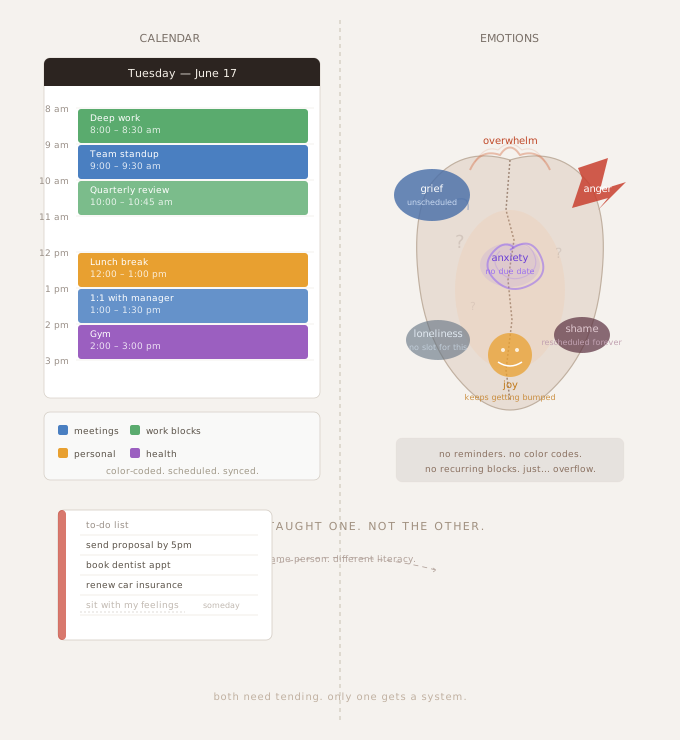
Why do people know how to manage their calendars better than their emotions?
We spent years learning productivity systems, time-blocking, and GTD frameworks. Nobody handed us an emotional equivalent. The calendar got a design. The inner life got inherited chaos.
MENTAL HEALTH & EMOTIONSALL POSTS
Whystill
6/26/20268 min read
The Importance of Time Management in Modern Society
In today’s fast-paced environment, effective time management has emerged as an essential skill for individuals across various sectors. As societal expectations increasingly prioritize productivity, the ability to efficiently organize one’s schedule has become paramount. People are often rewarded based on their ability to meet deadlines and manage multiple tasks simultaneously. This shift in focus highlights the stark contrast between managing calendars and managing emotions, with the former often receiving more emphasis in personal and professional settings.
Individuals are trained from an early age to adhere to a structured timetable, whether through academic settings or workplace obligations. Educational institutions emphasize the importance of punctuality and meeting deadlines, cultivating a mindset geared towards managing physical time effectively. The emphasis on punctuality naturally extends into adulthood, where professionals are expected to juggle various commitments efficiently. This cultural inclination towards time management often results in individuals developing superior skills in managing their calendars, while their emotional intelligence remains underdeveloped.
The digitally-driven world also plays a significant role in reinforcing this trend. With an array of digital tools and applications designed for calendar management, individuals find it easier to compartmentalize their tasks and commitments. These technological advancements simplify the process of scheduling and allow users to visualize their time allocation, ultimately leading to well-planned days. Consequently, this sets a precedent that values tangible time management over the more abstract and complex nature of emotional management.
In summation, as society continues to navigate an increasingly fast-paced landscape, the importance of time management is likely to grow. Given that individuals are equipped with systematic resources to enhance their calendar skills, it becomes imperative to also encourage the development of emotional awareness and resilience. Fostering a balance between these two areas will lead to a more holistic approach to personal and professional development.
The Role of Emotional Awareness
Emotional awareness is a crucial aspect of effectively managing one’s feelings. It encompasses the ability to identify, understand, and interpret one’s emotions, as well as recognizing their impact on thoughts and behaviors. Despite its importance, many individuals find this process challenging, often leading to difficulties in navigating their emotional landscapes. In contrast, managing a calendar and scheduling tasks tends to be more straightforward, highlighting a disparity in the skills necessary for emotional regulation versus those required for time management.
One reason emotional awareness can be difficult is that emotions are complex and multifaceted. Unlike calendar events, which are discrete and can be easily logged, human emotions can be fleeting and influenced by various internal and external factors. This complexity often leads individuals to misinterpret their feelings or overlook them altogether. For instance, a person may feel anxiety but attribute it to their busy schedule without recognizing that underlying feelings of inadequacy or fear may be at play.
Moreover, societal norms often discourage open discussions about emotions, reinforcing discomfort around emotional expression. The workplace and other environments typically prioritize productivity and efficiency, which may cause individuals to suppress their emotional responses rather than confront and understand them. This suppression further complicates emotional awareness, reinforcing negative cycles in emotional management.
In contrast, managing a calendar is inherently logical and structured, providing a clear way to allocate time for various activities. The straightforward nature of scheduling contributes to a sense of accomplishment that is often lacking in emotional awareness. Developing emotional intelligence, however, can enhance one's capacity to manage feelings effectively, much like establishing a well-organized calendar facilitates better time management. By cultivating emotional awareness, individuals can improve their emotional well-being, contributing to healthier relationships and more balanced lives.
Social Norms and Emotional Expression
Societal expectations regarding emotional expression significantly influence how individuals manage their emotions. In many cultures, a strong emphasis is placed on emotional restraint and composure. From an early age, individuals are often socialized to perceive vulnerability as a weakness. This cultural narrative discourages open emotional expression and breeds discomfort with vulnerability. As a result, many find themselves unprepared to confront and manage their emotions in a constructive manner.
In contrast to the structured realm of calendar management, where organizing tasks and appointments is widely accepted and encouraged, emotional management remains less understood and often stigmatized. While people are trained to prioritize their schedules and effectively allocate time for tasks or events, they are not equally equipped to allocate time for introspection or emotional processing. This disparity creates a dichotomy in skills; where planning and organization come as second nature, emotional intelligence often requires conscious effort and support.
Moreover, societal attitudes toward emotional honesty can further hinder an individual’s ability to cultivate emotional management skills. Emotionally expressive cultures promote sharing feelings and seeking support, while more reserved societies may impose limitations on such behaviors. In these environments, individuals may feel compelled to suppress their emotions, leading to an accumulation of unprocessed feelings. This suppression can result in stress, anxiety, and other psychological issues, detracting from one’s ability to manage emotions effectively.
The contrasting norms regarding calendar management and emotional expression highlight the need for a shift in societal perceptions. Promoting environments that value emotional honesty and vulnerability is crucial for encouraging individuals to develop emotional management skills alongside their organizational abilities. Only by addressing these cultural attitudes can a more balanced approach to both emotional and time management emerge.
The Familiarity of Tools and Techniques
In today's fast-paced society, numerous tools and techniques facilitate effective time management, with calendars and planners reigning supreme. These tangible instruments aid individuals in organizing their schedules and commitments, fostering a sense of control over their time. The variety of available options, ranging from digital apps to traditional paper planners, reflects a society that prioritizes efficiency and productivity. This familiar landscape enables people to easily navigate their daily responsibilities, bolstering their ability to effectively manage their time.
Conversely, when it comes to emotional management, the array of resources appears significantly limited. While there are some tools and resources aimed at emotional regulation, such as journaling or therapy apps, their presence does not compare to the abundant offerings for time management. The stark contrast reveals a deeper societal challenge: emotions are an abstract concept, making them more difficult to quantify and manage through traditional methods like scheduling. Unlike a calendar, which provides a clear visual representation of tasks and appointments, emotions are inherently complex and multifaceted.
The inherent tangibility of scheduling tools allows individuals to interact with their time management practices in concrete ways. This leads to a greater familiarity and ease of use, fostering a sense of confidence in handling tasks and deadlines. On the other hand, emotional management strategies often require introspection and practice, which can feel daunting. The lack of structured tools may result in feelings of uncertainty or inadequacy when individuals attempt to confront their emotions. This disparity in familiarity can lead to a preference for managing time over emotions, highlighting the need for more accessible resources that demystify emotional management.
Impact of Technology on Calendar Management
In the contemporary digital landscape, technology has significantly transformed the way individuals manage their calendars. Numerous applications and tools are available that assist in organizing appointments, setting reminders, and planning tasks efficiently. Tools such as Google Calendar, Microsoft Outlook, and various project management apps like Trello and Asana have become integral in enhancing productivity and time management.
These applications not only allow for seamless scheduling but also enable users to share their calendars with others, facilitating collaboration in both personal and professional environments. The integration of artificial intelligence into these tools has further streamlined calendar management, automating scheduling, and sending reminders with minimal effort from users. The convenience and accessibility of these tools contribute to their widespread adoption, allowing individuals to maximize their efficiency effectively.
Despite the advancements in calendar management, the same level of investment and development has not been observed in the realm of emotional wellness. While numerous apps focused on mental health exist, their impact and integration into daily life do not parallel the prominence of calendar management tools. There are various reasons for this disparity; one significant factor is the perceived stigma surrounding mental health and emotional management. Unlike the clear productivity benefits seen with calendar apps, the advantages of emotional wellness tools are often abstract, making them less appealing to the average user.
The lack of user-friendly, highly engaging emotional wellness apps could also be a factor. Many existing tools do not provide the same level of convenience or efficiency as calendar management applications. As a result, individuals may prioritize their schedules over emotional well-being, perpetuating the notion that managing one’s calendar is more attainable than navigating complex emotions. This dichotomy raises important questions about our understanding of well-being and how best to harness the potential of technology to support emotional intelligence.
Psychological Barriers to Emotional Management
Effective emotional management is often hindered by various psychological barriers that can complicate an individual's ability to confront their feelings. One significant factor is the fear of confrontation, which can stem from past experiences where expressing emotions led to negative outcomes. This fear may manifest as avoidance behavior, where individuals consciously or unconsciously refrain from engaging with their emotional states, leading to a lack of awareness and understanding. Consequently, when individuals are not fully in touch with their emotions, they may struggle to manage them effectively, resulting in unprocessed feelings that can exacerbate stress and anxiety.
Another critical barrier comes from past traumas, which can profoundly shape an individual's emotional landscape. Traumatic events often create a protective mechanism in the psyche, prompting individuals to suppress or deny their emotions as a means of avoiding pain. This defense mechanism, while serving to shield them in the short term, can lead to deeper emotional issues when left unaddressed. The inability to confront and process these traumas can result in emotional dysregulation, making it challenging to navigate complex emotional experiences.
Furthermore, a lack of emotional intelligence can significantly impair one's capacity for emotional management. Emotional intelligence encompasses the ability to recognize, understand, and manage one’s own emotions, as well as the emotions of others. Individuals who struggle with emotional intelligence may find it difficult to identify their feelings, leading to confusion and frustration. This knowledge gap can create a cycle where the individual is unable to express their needs or engage in effective communication, further complicating their emotional health.
Strategies for Improving Emotional Management Skills
To enhance one's emotional management skills and bridge the gap between calendar management and emotional awareness, individuals can adopt several practical strategies. One effective method is mindfulness, which involves being present and fully engaged in the current moment. Mindfulness techniques can include meditation, deep breathing exercises, or simply taking moments throughout the day to pause and reflect on one’s feelings. By practicing mindfulness, individuals can increase their emotional awareness and understand their reactions better, leading to improved emotional regulation.
An additional strategy is seeking therapy or counseling. Professional guidance can provide individuals with tools and techniques to navigate their emotional landscapes more effectively. Therapists can help identify patterns of thought and behavior that may contribute to emotional challenges, which empowers individuals to make more informed decisions about their emotional responses. Cognitive-behavioral therapy (CBT), in particular, is a method that assists individuals in changing negative thought patterns, thereby fostering greater emotional resilience.
Another beneficial approach is journaling, which serves as a valuable outlet for processing emotions. Writing about thoughts and feelings can help clarify what triggers certain emotional responses and can reveal underlying issues that might not be immediately apparent. Regular journaling encourages self-reflection and can bolster emotional understanding, as individuals become more attuned to their emotional states and responses to various life events.
Incorporating these strategies into daily routines can create a framework for effective emotional management. By cultivating mindfulness, considering therapy, and utilizing journaling techniques, individuals can develop a stronger emotional awareness akin to their capabilities in managing their calendars. Ultimately, improving emotional management skills is essential for promoting overall well-being and achieving a more balanced life.