
Why do devices designed to save time leave people feeling they have less of it?
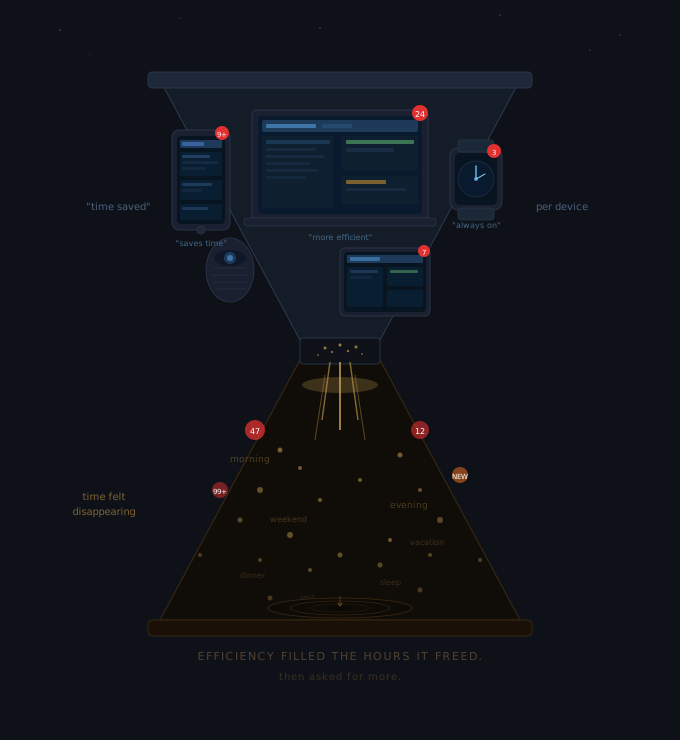
Every tool that saves a minute also creates a new expectation for that minute. The email app that answers faster means more emails expected. The appliance that cooks quicker means a longer work day justified. Efficiency didn't create free time — it raised the baseline of busyness.
DAILY LIFE & TECHNOLOGYALL POSTS
Whystill
6/28/20268 min read
Introduction: The Paradox of Time-Saving Devices
In an age characterized by technological advancements, time-saving devices have rapidly integrated into our daily lives, offering the promise of increased efficiency and enhanced convenience. From smart home appliances to mobile applications designed to streamline tasks, these innovations are marketed as essential tools for managing our increasingly hectic schedules. However, paradoxically, many individuals find themselves feeling more pressed for time rather than liberated from the traditional constraints of daily routines.
The allure of time-saving devices lies in their proposition that they can afford users the luxury of time, allowing them to focus on meaningful activities rather than mundane chores. For instance, robotic vacuum cleaners, meal preparation gadgets, and even task management applications are designed with the intention of simplifying our lives. Despite this promise, a growing body of evidence suggests that the very technologies meant to alleviate our burdens may inadvertently contribute to a heightened sense of urgency and stress. Users often report feeling overwhelmed by constant notifications, the expectation to be perpetually responsive, and the pursuit of multitasking. This creates a reality where, instead of liberating ourselves from time constraints, we find ourselves ensnared by a new set of obligations and pressures.
This tension introduces an opportunity for further exploration into the psychological and sociocultural dimensions of time-saving devices. Understanding the implications of their use and the effects on our perception of time is essential. As we delve into this subject, we will dissect the factors that feed this modern dilemma, including societal expectations, technology addiction, and the cumulative impact of our increasingly fast-paced lifestyles. This exploration will shed light on the complex relationship individuals maintain with time and the devices purported to make it more manageable.
The Psychological Impact of Technology
Our understanding of time has undergone a significant transformation with the influx of technology into our daily lives. The proliferation of smartphones, computers, and various gadgets has changed how we perceive and manage time. A fundamental aspect of this shift is cognitive overload, which occurs when individuals are bombarded with vast amounts of information and notifications. This incessant influx of data can lead to mental fatigue, making it challenging for individuals to prioritize tasks effectively.
Moreover, the expectation to remain constantly connected creates an environment where individuals feel pressured to respond to messages and alerts almost instantaneously. This condition is commonly referred to as 'always-on' culture, in which the boundaries between work and personal life blur. Consequently, this can lead to heightened feelings of being rushed as people attempt to juggle multiple responsibilities and communication streams. The brain, in its effort to process these myriad inputs, tends to distort our perception of time, often making it feel as if we have less of it.
The psychological implications of technology also encompass a phenomenon known as time scarcity, where individuals feel that they lack sufficient time to accomplish all necessary tasks. When augmented by social media, where the curated lives of others are on display, the perception can lead to anxiety and FOMO, or fear of missing out. This pressure intensifies the feeling of urgency, and people may resort to multitasking, which ironically leads to inefficiency and a further sense of time constraint.
In essence, while technology is designed to save time, it can paradoxically create a sense of urgency and pressure. Understanding this psychological impact is crucial for individuals to navigate the complexities of modern life effectively, promoting a healthier balance between technology use and time management.
Increased Expectations and Accessibility
In contemporary society, the advent of time-saving devices has ushered in an era of heightened expectations regarding productivity and accessibility. These devices, ranging from smartphones to sophisticated software applications, serve to expedite various tasks, leading individuals to feel an implicit pressure to maximize their output. As these tools enable us to accomplish tasks with greater efficiency, they simultaneously foster an environment where the demand for productivity skyrockets.
The ease of access provided by technology has fundamentally transformed the way we manage our time. Information that was once hard to procure can now be obtained instantaneously with just a few clicks. This accessibility inundates individuals with an overwhelming amount of data and communication, leading to an expectation that one should be constantly engaged and responsive. As a result, many find themselves struggling to meet these rising demands, often feeling that their time is in short supply.
Moreover, these time-saving devices create a paradoxical effect: while they are designed to facilitate efficiency, they also foster an atmosphere of continuous work. The notion of being perpetually connected implies that there are fewer boundaries between personal and professional life. Therefore, the expectation to respond promptly to emails or messages can lead to an incessant cycle of work, consequently increasing feelings of time pressure.
In such a landscape, the challenge becomes not simply navigating the tools themselves, but managing the expectations that come with their use. Individuals often find themselves in a dual struggle: balancing the benefits of efficiency against the relentless demands placed upon their time. This intersection of increased expectations and nearly ubiquitous accessibility exemplifies the complexity surrounding time management in the digital age.
The Illusion of Time Management
The advent of time-saving devices has significantly transformed the way individuals approach daily tasks, often leading to the perception that better time management can be achieved through their utilization. Devices such as smartphones, tablets, and various productivity applications are marketed as tools designed to enhance efficiency. However, this belief largely stems from an illusion, as reliance on these tools can paradoxically result in increased feelings of time pressure and decreased productivity.
Multitasking, often enabled by these time-saving devices, emerges as a primary contributor to the inefficacy of time management. The ability to switch between tasks—such as responding to emails while participating in video calls—can create an ongoing sense of being busy, yet it ultimately diminishes focus and cognitive capacity. Studies have shown that switching between tasks can impede overall efficiency, leading to prolonged completion times and a greater likelihood of errors. This constant juggle can leave individuals feeling overwhelmed, despite the intention behind employing such devices.
Additionally, the expectation that time management equates to the use of multiple tools can distort priorities. Instead of implementing structured approaches to organizing time, individuals may find themselves consumed by the complexities of managing their devices rather than the tasks at hand. Consequently, the end result is often a cycle of frustration and anxiety where time-saving devices, in fact, complicate rather than simplify daily schedules.
In this context, it becomes crucial to reassess the value of time-saving devices in the realm of effective time management. While these tools can serve beneficial functions, their use should be balanced with strategies that promote focused attention and mindful task completion to confront the illusion of enhanced productivity they often perpetuate.
The Role of Social Media and Digital Communication
In the contemporary digital landscape, social media and digital communication platforms play a pivotal role in shaping our perceptions of time. As individuals engage with these platforms, they are often inundated with a constant flow of information, updates, and notifications that demand their attention. This relentless connectivity can foster a sense of urgency, making users feel as though they must be perpetually available and responsive, thus contributing to feelings of time scarcity.
Social media encourages a culture of comparison, where individuals constantly assess their own lives against the curated highlight reels presented by others. This practice can induce a sense of inadequacy regarding how one spends their time. For instance, seeing friends participate in various activities or achieve professional success can create pressure to 'keep up' or optimize every moment, leaving individuals feeling as though they are falling behind in their own lives.
Furthermore, the phenomena of 'FOMO,' or fear of missing out, is exacerbated by social media and instant messaging applications. Users may feel compelled to engage with every trending topic or event shared on their feeds, fearing that a lack of participation will render them disconnected or uninformed. This pressure to stay current can lead to a paradoxical experience where, despite the time-saving devices at our disposal, users often find themselves feeling more pressed for time than ever before.
In essence, while social media and digital communication tools are designed to enhance connectivity and streamline sharing, they can inadvertently heighten feelings of time pressure. The need to remain engaged and relevant in these virtual spaces can overshadow the time-saving benefits these technologies were initially intended to provide, resulting in heightened stress and a pervasive sense of urgency surrounding time management.
Strategies to Regain Control of Time
In today's fast-paced world, the proliferation of time-saving devices often paradoxically contributes to heightened feelings of time pressure. To combat this phenomenon, individuals can adopt several practical strategies aimed at regaining control over their time management.
First, it is crucial to set intentional limits on the usage of time-saving devices. Consider establishing periods during the day when these devices are put away, allowing for uninterrupted focus on tasks at hand. By managing device usage, it becomes easier to cultivate mindfulness and engage deeply with activities, thus reducing stress and enhancing productivity.
Next, prioritize tasks effectively to ensure that time is allocated to the most important activities. Utilizing techniques such as the Eisenhower Matrix can help in distinguishing between urgent and non-urgent tasks. By categorizing responsibilities, individuals can focus on completing high-priority tasks first, fostering a sense of accomplishment and control over personal schedules.
Additionally, setting clear boundaries with technology is essential to maintaining a constructive balance. Notifications from various applications can disrupt concentration and lead to fragmented workflow. Turning off non-essential alerts or scheduling specific times to check emails and messages can limit distractions, helping to conserve mental energy throughout the day.
Moreover, embracing the art of delegation can alleviate the burden of excessive responsibilities. Whether at work or in personal life, delegating tasks to others can free up valuable time and reduce feelings of being overwhelmed. Adopting this practice encourages collaboration and can lead to more efficient outcomes.
By implementing these strategies—limiting device usage, prioritizing tasks, setting boundaries, and delegating responsibilities—individuals can proactively regain control over their time. This shift in approach can ultimately lead to reduced stress and a more balanced, purposeful life.
Conclusion: Reframing Our Relationship with Time
Time-saving devices have undoubtedly transformed our daily routines, enabling us to accomplish tasks more efficiently and effectively. However, the paradox of these advancements is that they can simultaneously create a feeling of being more pressed for time. This blog post has explored how technological innovations, while intended to liberate us, can inadvertently contribute to a heightened sense of urgency and pressure. By relying heavily on these devices, it is easy to fall into the trap of equating productivity with worth, fostering a cycle of constant busyness and stress.
To mitigate this challenge, it is essential to reevaluate our relationship with time and the technology we use. This involves recognizing when time-saving gadgets become a source of distraction rather than efficiency. Mindfully integrating these tools into our lives allows us to reclaim our time and make more intentional choices about how we allocate it. Instead of allowing technology to dictate our schedules, we can use it to enhance our overall well-being and create more room for leisure and meaningful experiences.
Moreover, taking time to reflect on personal priorities and values can profoundly influence our time management strategies. Recognizing the significance of downtime, relationships, and self-care can shift our focus from merely filling time with tasks to enriching our lives with meaningful activities. As we reassess our approach, it becomes apparent that a balanced relationship with time—not an obsessive pursuit of productivity—leads to a more fulfilling existence.
In conclusion, it is time to embrace a healthier perspective on time management. By being conscious of the impacts of time-saving devices and prioritizing what truly matters, we can cultivate an environment that supports both productivity and personal fulfillment. This shift in mindset may ultimately pave the way for a more harmonious relationship with time, enabling us to thrive in our personal and professional lives.